
a case against hope™

the only way of knowing a person
is to love them without hope
- walter benjamin
love didn’t ruin me
Hope did
The kind that begged
-Unknown
I do not know love without hope. Which is to say. I do not know love without snorting the crack rock of potential.
Which begs the question: Have I truly ever loved. And there are different types of love, yes, I’m aware. But what I’m saying is, the only way I’ve survived this world is by infusing hope and meaning into every crevice of my own world. Is that an honest existence? I’m now questioning it. Am I ultimately making a dream for myself that may or may not come true. Whose to say. But we are told we have to have hope lately…but as a chronically hopful nigga I’m questioning the utility of unbridled delusion. Instead, I’ve been haunted by Amina Baraka saying we go about change by goin about daily work. And that work…I’m not seduced to romanticize any longer with what could be. There is what is.
Hope has been one of the more destructive forces in my life, in my psyche, and in my survivorship.
When I was diagnosed with cancer, I was told by providers to therapists to support group members to have hope - have hope I’d survive, have hope I’d find a donor, have hope, have hope, shit I was even treated at a center named after such a concept: City of Hope. The cancer industry runs on selling hope. It’s big money to run on a wish. It can morph into anything the consumer needs it to be. Hope became something I clung so desperately onto but it was something without form, without shape, it was purely a feeling. A feeling that has fueled my mania at times even. It was also a lie.
Sometimes we need to lie to ourselves within the circumstances we are in, I understand that. Each night, throughout my transplant, I would just hope I could get through this seemingly insurmountable shit. Everything was out of my hands so the best “i could do” was “hope for the best.” But Hope became a fuzzy idea of what living after cancer should look like. Rooted in my desires, my hope promised there’d surely be a happy ending. Why would I hope for anything less? So…Of course, when I survived, the other side of hope was despair. Because shit never unfurls how we thought it would. N We all do it. We hope to change the world, we hope for revolution, we hope for a better life, we hope for our crush to like us back, we hope for a promotion at our shitty job, we hope to go viral, but what’s dangerous about hope is that its a bridge to an ideal and if not critically engaged with, it can become relying on potential then falling into an earth shattering disappointment…because there is expectation with hope, it’s in its definition.
Hope is the “a feeling of desire and expectation, a belief that something good will happen,” and idk man that actually reads a little sinister to me!
Desire plus expectation is what breeds the idea that something good is destined to happen!? There’s an entitlement to an outcome without being grounded any real action. And why does normative love immediately come to mind as this attempt to actualize desire and expectation into a bond. Into an agreement. And if hope relies on “Shoulds” and these creation stories that are attached to these shoulds, then love cannot reimagine itself, it’s already constricted to a norm which is: Fulfilling that initial desire and expectation. It’s a limiting trap. Hope becomes dishonest because it’s working off false pretenses. I don’t believe engaging with things, concepts, people, whatever the fuck else for their potential anymore - shit makes my skin crawl - I care about what the fuck is actually happening.
When it comes to hopelessness, Bayo Akomolafe comes to mind.
A couple years ago, I listened to a podcast episode where he shared a story of speaking with climate scientists about how to communicate “the end of days.” Could it be possible to deliver a message of hope for a future in the story of climate disaster? He posited the Yoruba myth that a wild god is coming to visit, coming to swallow the Earth. There is an acceptance of what is in such a story. Unlike The Great Hope by Ellen G. White which is meant to deliver a message that in the midst of the battle between God and Evil, hold out hope that Jesus Christ himself will return in a Second Coming to save us all. There’s a stark difference between the two. One is a functional story, another is an impractical fantasy. One tells the truth differently, another is an idealistic lie. One creates a mythology of what is even if it’s despairing. We may actually get swallowed the fuck up and no benevolent God or Christ is coming to carry us in a chariot to heaven. It just is man. And we here on the earth. Until we not.
But walela what about the kids? What about their futures? Should we not hope for them? First of all, the kids are feeling hopeless themselves.
And shit I would be too if I was their age. I believe in the importance of meeting our youngers within that and finding a pivot. Hope has lost its utility for We are sold hope at every turning point in the West. We are encouraged to be motivated by delusion, desire, and potential which are all distractions from being grounded in our material conditions. And Hope, especially, is a political project in the United States - prime example: Obama. Barack Obama’s initial campaign platform and merchandise ran on the motifs of Hope and Change. He was presented as this great beacon, neoliberal savior, and as if his presidency would usher in America officially becoming a post racial society. And to this day, people have been so pilled up off the idea of Black person being head of state, n this unreasonable hope that we, too, can steer the imperial core, that many of our folks refuse to deal with what is: Obama was and remains a pawn of the state and fulfilled carrying out america’s project of violent expansion.
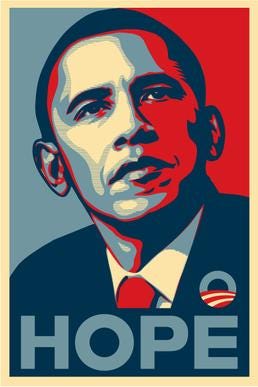
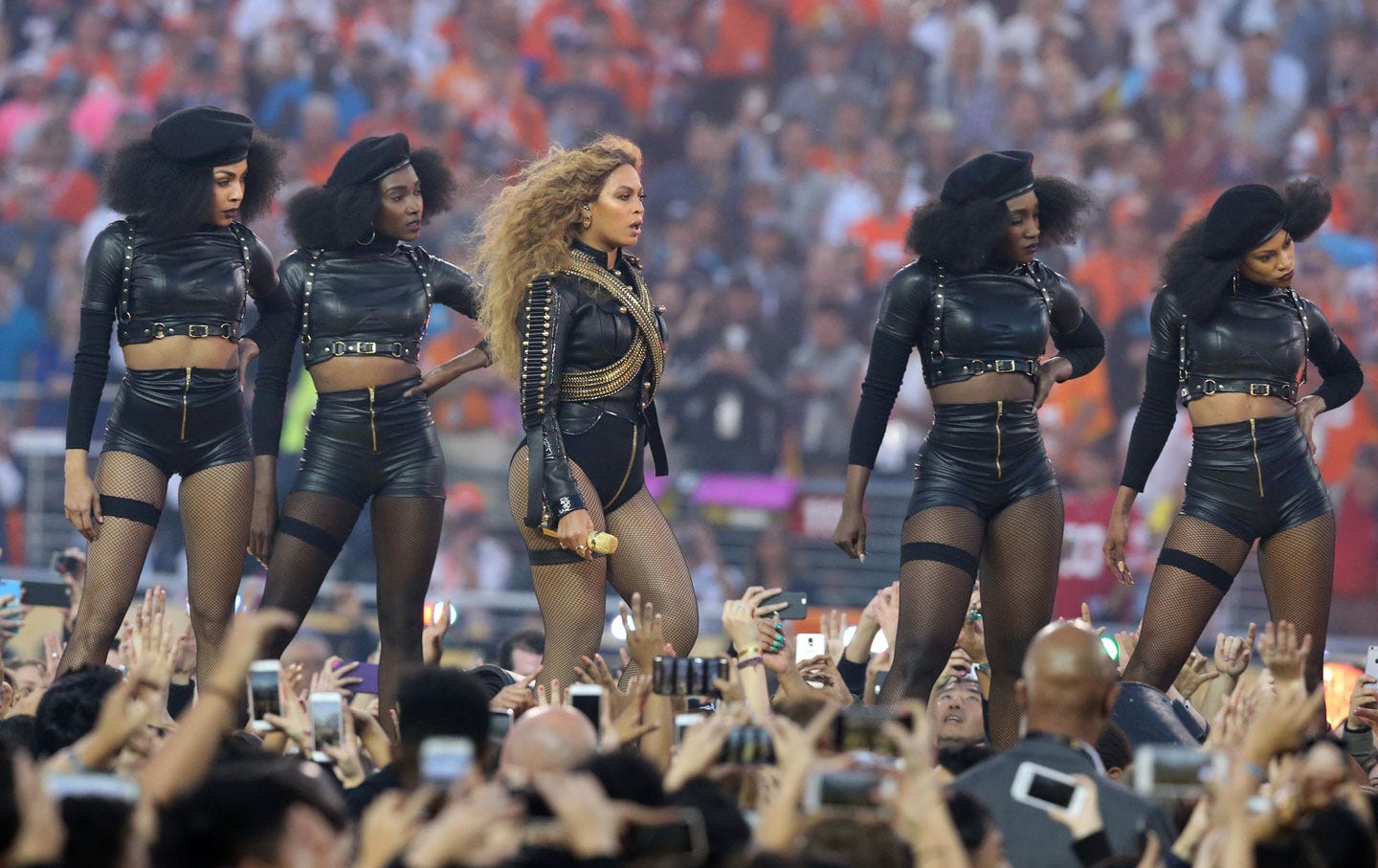
Recently, Rhys Langston brought up in a public conversation at Legacy Library that it feels as if everyone is just wanting to go back to that “hopeful” era, this idea that representation can save us - if we could just bring back Obama, bring back Beyonce in her Black Panthers cosplay, and if we could just see ourselves in these “powerful positions,” then we can procure hope (false pretenses) from these images, and that will be enough to assuage the daily unsettling existence of living in a settler colony. But this is an existence rooted in a cognitive dissonance. Hope relies being a bridge to an ideal. It is dishonest Lately, I’ve been questioning what is a realistic existence in these times without being primarily motivated by desire and expectation but instead being motivated by something like: discipline.
When I entered my 30s, I felt this overwhelming lack of hope and was sincerely concerned by it. Did this mean I had given up? Had I submitted myself to defeat?
It felt very different than my teenagehood and 20s where I was fueled by hope and its promise. But this confusion led me to confront how intense of a disassociative existence I was leading. This new era I was entering required me to grieve and accept. It’s true: I ain’t changing the world, I may never see freedom in this lifetime, my cancer could relapse tomorrow, I could never get that promotion, I may never get consistent income as a writer, the list goes on. But that acceptance doesn’t automatically equate to nihilism or some other bleak shit. Eventually, it became incredibly liberating in choosing to sit n accept hopelessness. Because it meant I needed something else to motivate me. Something that felt more honest.
As I continued to engage with the idea of living in service to discipline rather than hope, I noticed I could still feel joy, I could still be whimsy, and I still maintained belief, but I was no longer motivated by some ideal of what my life or my future could be like. I want to be clear, a lack of hope doesn’t mean I don’t dream for myself. It means I don’t rely on solely wishing for the future.
Yesterday, my homeboy reminded me of the Dolly Parton quote that goes something like dreams are rooted in action, wishes are passive hopes without effort. Or…to translate to a saying all our grandparents love: faith without works is dead. I’ve been thinking of the word discipline a lot thanks to the work of Athena Sayaka. To me, discipline deals with what is. It’s choosing a devotion to the present. I bring etymology to the party every time but discipline got its roots in “to learn.” And I guess what is real love for myself, for others, for the world but a commitment to learn. Potential, therefore hope, gets in the way of that, it’s a blurring. There’s a commitment to inflexibility inherent in that. There is an unwillingness to be changed. But rather an attachment to what could be. Therefore there’s an inability to grieve. Which leads back to acceptance. N Acceptance doesn’t require hope, in fact acceptance requires being so firmly entrenched in what is true that you have to make a decision to change within that.
So yeah man, shit is rough outside. Everybody got different things, concepts, themes, motifs, whatever the fuck to get them through. N the best I can do, to reference Amina Baraka, is get myself together and then get my community together. I don’t need hope to do that, I been there, I done that. The shit almost killed me, hope was so deceptive I almost was incapable of accepting what is true. Instead, I need discipline, I need love, I need ritual, I need consistency, I need change, I need what is tangible, I need action, I don’t need no happy ending, I’ll make it through. Someway. Somehow. Or not. But I’m here for the ride regardless.